
Knossos is the largest preserved Minoan palatial centre and one of the most visited archaeological sites in Greece. Its importance comes from the scale of the Bronze Age complex, its evidence of administration and ritual, and its place within the wider Minoan world.
The site is also inseparable from the myths of King Minos, the Labyrinth and the Minotaur. A thoughtful visit distinguishes those stories from the archaeological evidence while allowing both to enrich the experience.
Knossos and the Minoan palatial centres
The palace developed through several building phases during the Bronze Age. Its central court, storerooms, ceremonial areas, staircases and water-management systems show a complex society connected through trade and exchange across the eastern Mediterranean.
In 2025, Knossos and five other Cretan palatial centres were inscribed together on the UNESCO World Heritage List. The inscription recognises them as a connected cultural property rather than six isolated monuments.
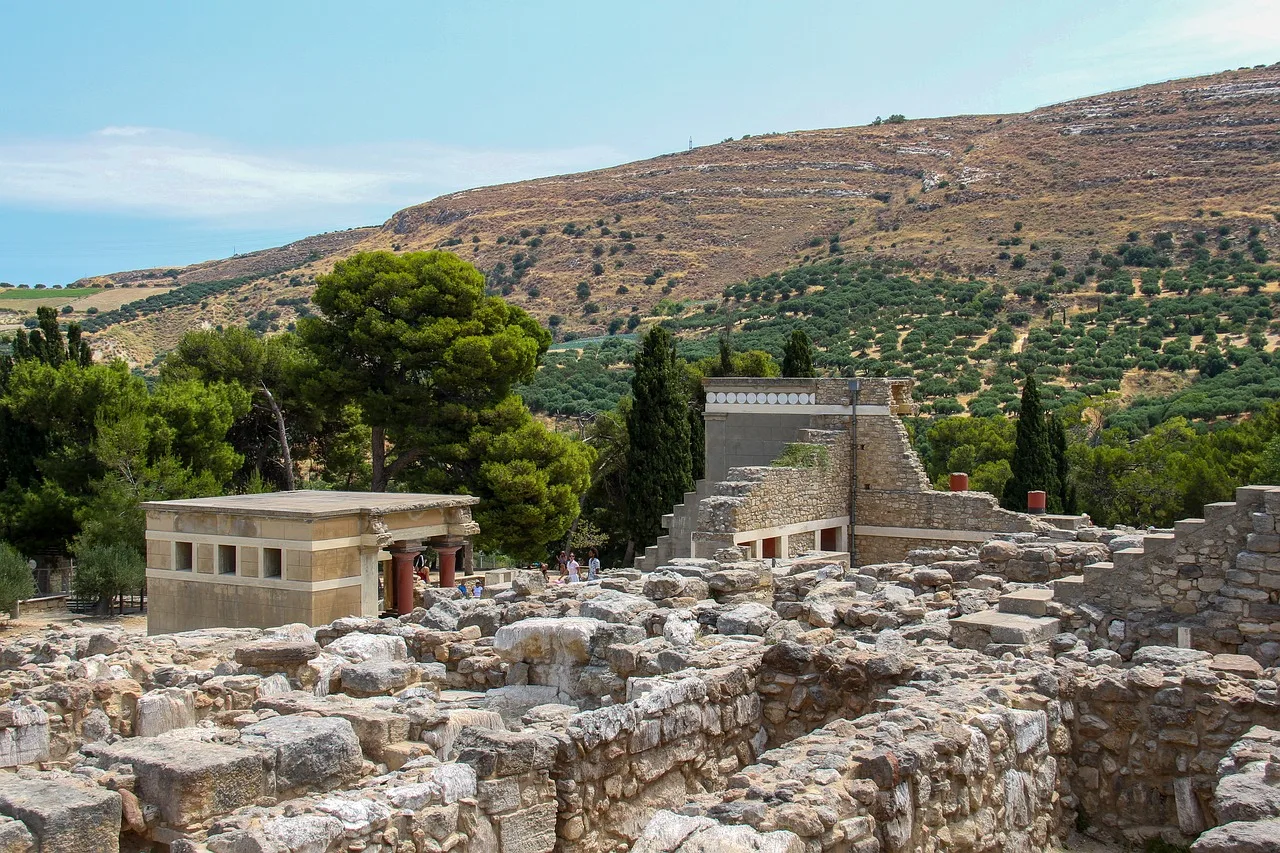
What to look for at the site
- The central court and the way major wings are organised around it
- The Throne Room complex and ceremonial spaces
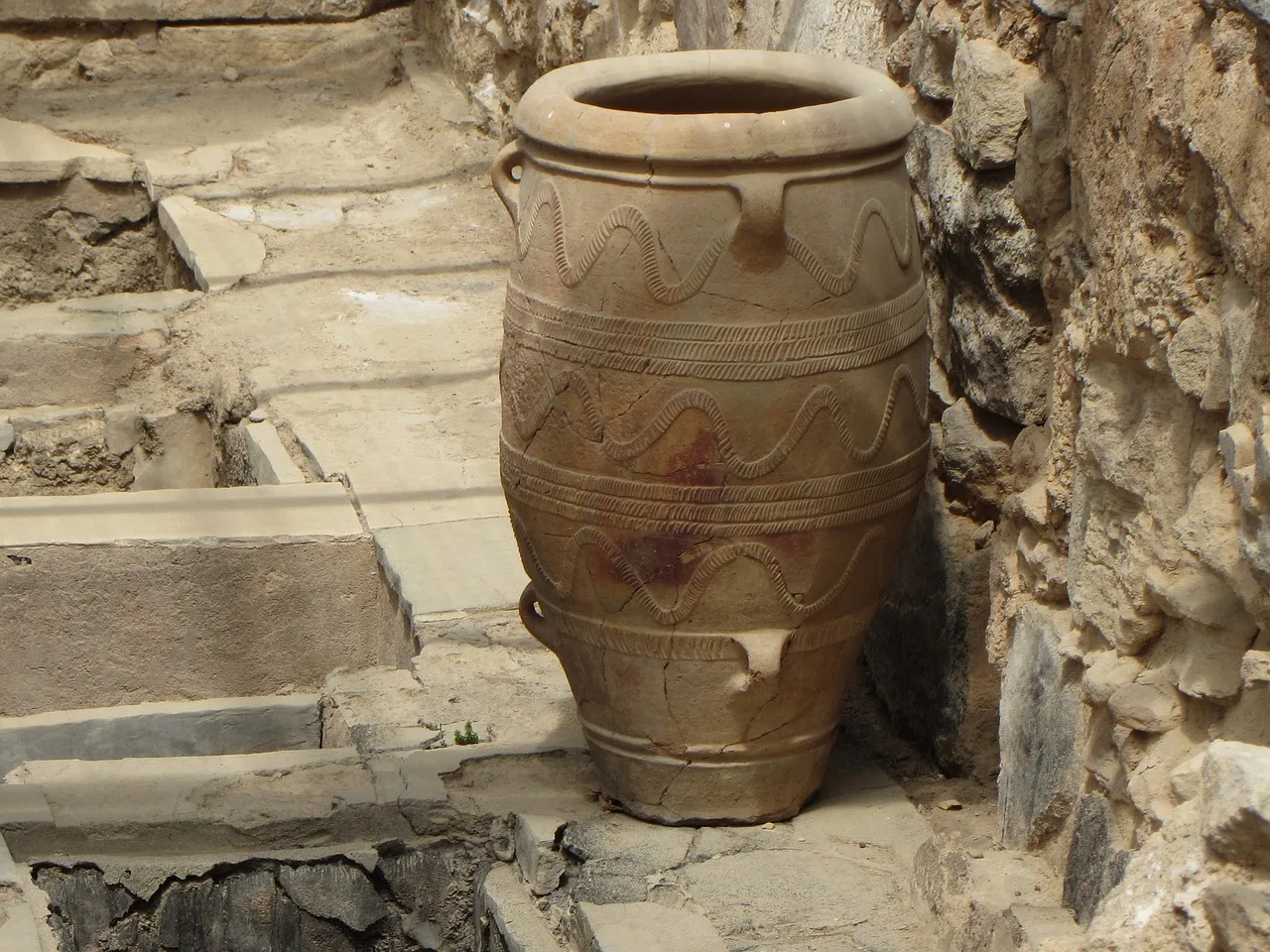
- Storage areas with large pithoi, or storage jars
- Staircases, light wells and water-management features
- Reconstructed architectural elements and fresco copies
Reconstruction and interpretation
Early twentieth-century excavation and reconstruction under Arthur Evans shaped how visitors see Knossos today. The red columns and restored sections make the architecture easier to imagine, but they also reflect interpretation rather than untouched Bronze Age fabric.
That does not reduce the value of the site. It simply means visitors should understand which parts are ancient remains, which are conserved, and which were reconstructed.
Myth and archaeology
The palace is traditionally linked with King Minos, Theseus, Ariadne and the Minotaur. Archaeology cannot prove the myth as a literal event, but the complexity of the site and the cultural memory surrounding it help explain why Knossos became its setting.
Add the Heraklion Archaeological Museum
Many original objects are in the Heraklion Archaeological Museum rather than at the palace. The museum’s galleries include pottery, seals, jewellery, ritual objects and Minoan frescoes presented within a broader chronology.
Visitors with a strong interest in history should see both, either on the same day or on separate days at a slower pace.
Practical planning
- Check official opening hours and admission before travel.
- Visit earlier when possible during hot summer weather.
- Wear shoes suitable for uneven archaeological ground.
- Arrange a licensed guide in advance for detailed interpretation.
- Use private transport when you need hotel pickup or a combined itinerary.
Frequently asked questions
Is Knossos genuinely ancient despite the reconstructions?
Yes. The archaeological remains are ancient; selected sections were reconstructed in the twentieth century to present an interpretation of the palace.
How long should I spend at Knossos?
Many visits take around 90 minutes to two hours. Allow more time for a licensed guided tour or detailed exploration.
Is Knossos a UNESCO World Heritage Site?
Yes. Knossos is one of six sites in the serial property ‘Minoan Palatial Centres’, inscribed in 2025.